The Hidden Reason Car Buying Still Feels Broken (+ How to Fix It) | Aaron Baldwin, President at Mobility Global, Sales Solutions

 Apple Podcasts

 Spotify

 YouTube

 RSS Feed
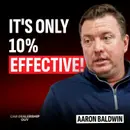
Aaron Baldwin estimates that coordination between dealers, automakers, and vendors is maybe 10% effective today, and argues that a bad car buying experience doesn't start in the showroom, it starts with the very first ad a shopper sees.
Aaron Baldwin is the President of Mobility Global Sales Solutions, the division that brings Automotive Mastermind, MarketScan, and Polk under one roof.
He started out selling cars and working deals at Asbury Automotive Group in the mid-2000s, was the founding technical leader at CarNow in the early days of online car buying, and now oversees a data operation that draws on 100 years of vehicle registrations from all 50 states and roughly 7 billion payment calculations every month.
Topics:
00:55 OEM And Dealer Messages Collide.
03:25 OEM Doesn't Know Dealer Discounts.
07:00 Not Another Tool, Integrate The Data.
11:20 100 Years Of Registration Data.
16:00 Handoffs Are Not Happening.
23:40 Get Into Something Emotional Like A Car.
31:10 Fragmentation Is The Biggest Opportunity.
This episode is brought to you by:
1. Proton IT - Around-the-clock protection starts with around-the-clock support. Visit @ here for more information.
2. Uber for Business - Your customers ask for Uber by name. Why are you running your courtesy rides through anyone else? Register @ here.
3. Mobility Global - Mobility Global Sales Solutions is the industry’s most comprehensive sales intelligence, one trusted platform that turns market signals into actionable insight so you can confidently outperform competitors and drive lifetime value. Learn more about Mobility Global @ here.
Check out Car Dealership Guy’s stuff:
For dealers:
Industry job board ➤ http://jobs.dealershipguy.com
Dealership recruiting ➤ http://www.cdgrecruiting.com
Fix your dealership’s social media ➤ http://www.trynomad.co
Request to be a podcast guest ➤ http://www.cdgguest.com
For industry vendors:
Advertise with Car Dealership Guy ➤ http://www.cdgpartner.com
Industry job board ➤ http://jobs.dealershipguy.com
Request to be a podcast guest ➤ http://www.cdgguest.com
Car Dealership Guy Socials:
Everything else ➤ dealershipguy.com
You have the dealer and the OEM both trying to accomplish the same goal, right? They're both attacking the same problem, but [music] not coordinated. I bought a product and I got multiple messages and they were definitely not coordinated. So, how effective is it today? I would say [music] maybe 10% effective. There's so many handoffs that need to occur and in most cases those handoffs are not occurring. This is a big problem and it's going to require a big solution. Amazing.
Today I'm joined by Aaron Baldwin, president of sales solutions at Mobility Global. Car buyers expect a smooth experience, but dealers, automakers, and vendors are still sending uncoordinated messages and prices before the customer ever walks in the door. Aaron breaks down why that fragmentation is the industry's biggest challenge and how connecting the data behind it can fix the handoffs that break the deal. Welcome to the Car Dealership Guy podcast.
What's the tier list problem? Explain this term to me that you mentioned earlier when we were having coffee. Yeah. No, the tier list problem is, uh, it's affected us in the automotive industry for a long time. You know, you have the dealer and the OEM both trying to accomplish the same goal, right?
I mean, we, we both want to sell cars, right? The OEM's trying to push some volume, the dealer's trying to sell cars, make a solid profit on it, and they're both attacking the same problem, but not coordinated. So if you think about all the marketing messages that are going out, uh, and we'll just use General Motors as an example.
A dealer doesn't know when GM's going to send a message out to a customer who's driving a GM vehicle. And so you could end up at the situation where you're sit- hitting that customer with multiple messages, and a lot of times, even within those messages- I don't think you can end up. I think you do end up in that situation.
Yeah, you do. Yeah. It's a very fair point. Right? Um- I just experienced it myself, by the way. Okay. Yeah, I would- I bought a GM product, and I got multiple messages, and they were definitely not coordinated. Amazing experience at the dealership. Of course. No hate. Amazing product from GM. I mean- Um- ... I, I, I'm in the GM family myself
well, yeah. No, no hate, but I definitely, there was multiple messages and it was uncoordinated. And, you know, dealers, we've, I've had conversations about this at length, but I experienced it myself, so. Yeah. And, and, and a lot of times in those messages as well, you'll see some, you know, disparate pricing that's sitting against them as well, right?
So what is being quoted to this customer? What type of vehicle is being quoted? What's the packaging and fitment of it? How is the payment being calculated? What's the down payment that's being utilized for that, if there is a payment being calculated? So creating that coordination across the industry, I think, is a real big consumer experience problem that ultimately if we work together to solve, uh, we're going to be able to sell more cars.
So we, well, you are representing Mobility Global Sales Solutions. Um, and I'm curious if internally you've, you've seen, I guess, the FTC stuff as a tailwind. Because in a way, isn't that a forcing function for dealers to adopt your products to have that alignment across pricing?
Well, from the FTC's perspective, um, at, at least how we've interpreted the FAQs that were sent out- Mm-hmm ... and how that's all been put out is, you know, ultimately they are particularly focused on the dealership side of the equation.
Um, now the OEMs are certainly, uh, paying attention to this. They are focused on it, but when you see a national ad come out, they're trying to make sure that they understand all the fees that could be part of those national lease payments- Mm-hmm ... and making sure they're added into the upfront costs. Um, but from a dealer's perspective, you know, when we're, when they're advertising the vehicle online, the OEM's not aware of the discounts.
So there's still a disparity in this on, is the dealer gonna discount this vehicle further? The OEM only has exposure into what the O- OEM has exposure into, right? And so their push is always gonna be on the national ad front, where the dealer's trying to actually retail a car. Wow. And do you th- do you think there's a world we can realistically get to where That whole process is just in alignment, right?
The pricing is the same. The messaging is really synchronized. Like, do you, do you solve that today already? 'Cause I- 'cause again, I, uh, the next step, the next question I wanna ask you about is just overall consumer experience- Yeah ... and how dealers will, can compete in this world we're in and with, you know, the CarMaxes, the Carvanas, and whoever, and who are vertically integrated and control that experience.
Mm-hmm. But what's your, what's your thought on that? Can, can we really get that in proper alignment so that dealers can be more competitive in the years to come? We can. Now, that takes a lot more players than just a Mobility Global or the dealers or- Mm-hmm ... the OEMs. It takes a coordinated effort, um, between all three parties and, you know, I'm using Mobility Global just as an example there.
But it takes coordination across somebody who can be an intermediary there that's trusted and, and, and able to facilitate, um, you know, all of that interchange of information and all that integration of data to make that possible. Um, but it also requires the willingness of the OEM and the dealer to get there.
Um, there certainly are motions towards that. You know, in, in, in our world, um, we have, with three different OEMs, introduced private incentives, um, through a product called Enterprise EyeQ. Um, and, uh, so with Mazda, Audi, and Volkswagen, we produce loyalty incentives from the dealers' databases. Uh, this is all funded by the manufacturer, and we coordinate that pricing message coming out of our systems and landing directly to those consumers.
And then the dealer's able to, you know, when that consumer comes in, take the redemption code, make sure that the rebate's applied, that money's processed through their open part statement, and it's all synchronized between the three of us. It all talks. It all talks, and we're right in the middle. How do you, how are you approaching this trend in our industry which, of consolidation amongst dealers' tools, right?
Like, every dealer wants fewer tools in their, in their dealerships. Every dealer has too many tools in their dealerships. Mm-hmm. And everyone's looking, "What can I cut out?" Um, I saw the other day, I'm reading in circles, right, a dealer was talking about they replaced their review aggregator tool. Again, this isn't, like, some high-tech piece of whatever.
Sure. But it's still another tool that you're paying for. They replaced that with a ViBE-coded one, and it's been, you know, it's been solving their problem for them. Great. Sure. Um, and for them, they're like, "Okay, one less thing that I need to upkeep and, you know, it's kind of in my centralized system now."
So how do you approach that given that, you know, where dealers are at and having this fatigue of so many tools? How do you meet the dealers where they're at and, you know, provide that level of service.
I was actually on the phone with, uh, a couple of different dealer principals ye- just yesterday on this same topic.
Big question was, "You're, uh, you're introducing us to yet another tool that we've already got so many tools and we're asking our salespeople and our BDC managers and our sales managers to log into." Why am I going to spend money and ask them to be somewhere else and institute another process?
And they're, they're not wrong. They're, they're not wrong at all. Um, so the way that we're approaching this is not from the perspective of saying, "We're gonna go out there and build a DMS," or, "We're gonna go out there and build a CRM, and we're gonna try to consolidate it into this, you know, kind of moat of solutions that, that's all coming from Mobility Global."
But better, why can't we integrate the data and the intelligence that we already have, like, you know, prediction scores? When is somebody gonna return to market? And make sure that that is in the dealer CRM, that it's in their CDPs, so that they can use the tooling they already have- Mm-hmm ... to execute on whatever message or whatever program that they're trying to get through.
So that's where we see our role. We see our role as helping on the back end to create that consolidation, uh, through very sophisticated data integrations and, and intelligence from, from those data integrations. What's the end game? Do I, at the end of the day, am I gonna use fewer tools? I think so. Simpler tools.
I- it's inevitable, right? Totally. I mean, you, you, you brought up an interesting point, right? You have a dealer who has vibe coded something probably- Yeah ... through Claude, uh, to replace a simple solution- It was through Claude, yeah ... for review ad- uh, review ag- aggregation.
And you're not asking for anything proprietary. No. You're not having to generate any proprietary data. And so naturally, if, if I'm a dealer, if I'm go back to my days at Asbury, right?
Yeah. I'm doing the same thing. I am actually starting to build out some of those tools. But where do I get the data that is not publicly available in order to make that system smarter? Mm-hmm. Right? If I'm gonna vibe code some type of system that's gonna sit on the front end to give my GMs or my sales managers the intelligence they need to make the decisions that they're going to make inside the store, they need to be fueled with all of the proprietary data sets that give them the answers they're looking for.
You know, the, um, I, I don't know if you saw the launch. So the White House put out this whole thing the other day. Um, the f- co-founder of Airbnb built out America.gov. I don't know if you got a chance to see that, but pretty incredible. It looks like an Apple website. And like you go to this website- I have not seen that
you have to check this out. Um, it's literally, you go to America.gov right now and you see it just, just, you know, a search bar. It's like, "How do I renew my passport? How do I, I don't know, get my, you know, Veterans Affair," or like whatever. Like a ChatGPT for the how-to and, uh- But, but- ... moving around the government, right?
but here's, but here's the crazy thing. He said it connects to like 2,000 or 20,000 organizations, and I just, what comes to mind when I see that, right away I'm like, "Okay, who's gonna do this for, like, dealership operations?" Think about that. Like, this is... They just did this for the government. Yeah. That's arguably the hardest thing to do it for.
This guy's brilliant, by the way. Completely fair. I mean, he's, he's a designer, but he's, he's great mind, you know, Silicon Valley guy. Anyways, but I was just in, I was inspired 'cause I saw that. I was like, "Wow." I was like, "First of all, I need to do that for Car Dealership Guy," right? We just, we just did this within Circles for- Mm-hmm
our Circles dealers only, um, where we launched Circles AI, where they can search groups they're in through an LLM. It's already live. Like, they go in, and I like to use the example, like, what are dealers, you know, paying their employees? Or what are pay plans? Or like what vendors are they- Yeah ... whatever. You can query anything.
But then I took a step back and I saw that, and I was like, "Okay, we need to do this for content as well." Mm-hmm. Like it's a no-brainer. We've done 700 episodes at this point. There's so much content within to k- provide an LLM for that. Long story short, though, when I think about you and I think about what you just said and having this unified corpus of data on the back end, it's like everything's gonna go to that, where the dealer, you're just gonna have, whether it be a search bar or not or agents, but you, you know, just being able to go in.
Everyone should go on America.gov right now and just, and just play with it. Mm-hmm. 'Cause if the government can do it- Right ... there's no reason private enterprise can't. That's exactly right, but it goes back to the dealer's problem, right? Who is going to consolidate all of that information so that it can be done?
Um, and you know, the, the beauty, I think, in what has been constructed within Mobility Global, um, and, uh, is all of this intelligence, I mean, 100 years of registration, uh, of Polk data with, uh, registrations coming from all 50 state DMVs. Um, you've got 7 billion payments being calculated per month out of Market Scan.
Um, you have, uh, you know, predictions happening inside of Automotive Mastermind constantly, uh, running on top of that. And then you have all the demographic information being pulled in. You have all the, you know, retail transaction information being pulled in. It literally has the information that you need that revolves around transactions and servicing and what are people actually doing, um, to find out, "Well, what should I do?"
Well, I want, I want people to know. You said Mobility Global. Yes. That is the rebranded name, and then what under your... Uh, can you tell us what's under Mobility Global? 'Cause I think- Yeah ... I think there was a little confusion in the market.
Um, you know- Sure ... there's, there's many brands that are now under your umbrella here in this company. Sure. So what, what is Mobility Global today?
Mobility Global is comprised of really three divisions, right? So if you think about Mobility Global, that's the, the parent company, and then within that, we have, uh, the CARFAX side.
So that's one division. Then we have the Planning Solutions division, which is really focused on, uh, the supplier side of the equation, right? Um, OEM intelligence on what car should I be building in seven years in order to serve the demand that's gonna be there. Mm. And for suppliers saying, "Where should I...
You know, how many parts should I build?" based on what they believe the forecasted production of F-150s is gonna be, right? Um, and then there's the division that, that, uh, I'm responsible for, which is Sales Solutions. Um, and within Sales Solutions, we merge together Automotive Mastermind, Market Scan, and Polk Uh-huh.
And so you oversee that today. Correct. And I, and I wanna, and I'm sure most people that are listening have heard of, uh, Mastermind, Polk- Mm-hmm ... um, MarketScan. I personally worked with MarketScan, uh, in my Getacard days. Okay, so I wanna go back now. Okay, so thanks for clarifying that. I wanna go back to, uh, what you said about having everything coordinated for the dealer.
So the other day, I had a friend who had a bad car buying experience. Mm-hmm. And they asked me, they said, "Yossi, how is this still possible in 2026?" And I told him, I said, "It's not the technology. It's not the desire or the will." Um, I know many, many operators very closely, super smart guys, really wanna, you know, it's in their best interest to offer the best customer experience.
I said, "The problem is that our industry is still very fragmented." Yeah. And because it's fragmented, and because the, you know, when you look at the value chain, it's not, these, these dealers are not fully vertically integrated, right? They, they're not all their own bank. They don't build their own cars. Like, there's all these different tiers to the supply chain.
I said, "Everyone has different incentives, um, and it's just not a unified, it's not a unified system." And this is the reason why I believe we have this issue, uh, because you have different parties who have, they have similar incentives, but they also have differing incentives. Yeah. We all want... If I'm a vendor, I wanna help you sell more cars, right?
Right. We're aligned. Me and you as a dealer, I'm aligned with you, but I also want my widget to be above yours- Yeah ... on, on your website. Right. Right. So we all have aligned incentives, but we also have con- con- you know, conflicting incentives. Correct. And I said, "That to me is the issue." The issue is that there's so many parties, and who is, how can you bridge that?
Who can be the glue that creates the most amount of alignment between all these different parties so that at the end of the day, we don't have to sit here and say the dealer's in trouble. Rather, the dealer's gonna offer a good customer experience- Mm-hmm ... and, and they're gonna, you know, be better and retain that business for years to come.
So- What's your thought on that? Yeah, no, I mean, you're spot on. I mean, the, the, the operators I talk to, dealer principals, GMs, that, I mean, everybody has the right intention. Everybody wants to provide a really excellent customer experience. Nobody's out there to provide a poor customer experience, right?
They know they sell more cars, they have better CSI. Everything's better when we give the customer a better experience. But- True ... the fragmentation, I think you're spot on, right? Um, I, I think back to, uh, my days selling cars and spinning paper, um, you know, I have to be in five different systems to get everything done that I need to get done, and when the customer goes back into the box, they're going through the menu process.
The menu process sometimes is connected and well connected to the DMS. Sometimes it's not. Sometimes I have to re-key stuff. Um, we, I mean, I, I still remember the beautiful sound of the dot matrix printer firing up. Love the dot matrix. But yeah, no, you're, you're spot on. There's fragmentation there.
And the fragmentation starts at the very top of the funnel. It's not just while they're in the store, right? So if somebody says they have a bad car buying experience, where did it start? Right? And it starts with the very first message. It starts with the very first advertisement they see, and then it goes all the way down through the chain because there's so many systems in play.
There's so many handoffs that need to occur, and in most cases, those handoffs are not occurring, right? Um, and that's where we believe we can be that trusted, uh, independent third party to help facilitate those handoffs throughout the chain in order to smooth out at least the technical side of the process that's running behind the scenes so that the processes that are implemented within the stores by the dealers, um, can, can be executed.
Aaron, uh, help me understand. You— I wanna go down to the micro level, right?
We spoke about the inconsistent or misalignment of messaging between OEM and dealer. So if I'm a dealer listening right now, and I know Mastermind is one of the products that you're, uh, over- you're overseeing, how do I align my messaging so that my marketing messaging to the customer is aligned with your or the OEM's messaging?
How do I do that? Yeah. And, uh, there's still room to, to, for improvement there, right? Um, you know, I mentioned the private incentive side of the equation, so that's one where we can-- we have created the alignment with, uh, with those manufacturers to make sure that the message that is going out to this customer is prioritized because it is a private offer that's going to-- and that only they will get, right?
So- That's only on incentives that the OEM's offering. Th- the private incentives that OEMs are offering. That's correct. Um, but, you know, you start looking at, you know, the different players who are out there in this ecosystem of communication, right? You know, I think about our sister business in Carfax.
They have a marketing file for their Carfax for Life product, right? So that marketing file, that marketing activity file, is something that can be extracted. It's something that we have access to, and we can see when a service message is going out, right? "Hey, you're, you're due for service," or, "There's an open recall on your vehicle."
And we provide the same type of intelligence and same type of data files inside of Mastermind, a marketing activity file. Mm-hmm. We can also consume it, right? But this comes back to that very initial point that we were talking about. It takes all of us playing within that ecosystem and sharing information in a safe and secure manner, authorized by the dealer, of course, uh, or the OEM, to give that transparency.
So we're there from a technical standpoint. We need to get to the point of everybody working together so that we can actually get it done. So how effective is it today? I would say maybe 10% effective. Wow. I think we've got a lot of room to go. So it's not very effective. No, it's not very effective. Yeah.
What are dealers texting you about nowadays? And I say text intentionally because- Yeah
text, you know, to me, is a proxy for, like, a very informal, kind of casual, you know, um, you know, kind of checking temperature. But, like, what are they asking you? What's the, what are the questions on dealers' minds? Yeah. No, the, the, they, they ask a, a wide array of things. Um, I mean, especially given, you know, what we do and the in- uh, insights that we have.
It can range from anything from- Can you lower my price? It, that, yes, certainly, uh, you get those. Um, but, uh, you know, anything from, "Hey, how is this brand doing in this market?" To, um, you know, uh, we get the questions, and I get the question still too, that you brought up about circles, right? Um, what, what's an effective, uh, pay plan for a BDC manager, or have you seen any new, uh, pay plan concepts out there for sales that are really working?
Um, but probably the biggest is, "Hey, I've got too many things going on. I got too many systems inside of my store. How do I make this easier on my people so that I can enforce a quality process?" They come into work. Mm-hmm. They sit down at their computer. They know what they need to do, and it's easy for them to get to.
And that is a, that is a, still a problem inside of the stores, and I think people are becoming a lot more wise to it and figuring out, "How do I consolidate this so that, you know, I'm not working with, you know, 40 vendors within my store to get, get a deal done?"
Vendors aside, like what, what's the biggest thing on your mind when you see where our industry is headed and just the pace of the dealership, how th- how commerce is being conducted?
Like, where are we, where are we headed over here?
It could go two different ways, right? One, I think the franchise model is durable, and I know a lot of people talk about, you know, the direct-to-consumer model, but the franchise model is durable. It creates a servicing network that is, you know, unparalleled in most cases, and it also creates a little bit of tension that's in the market between the OEM and the dealer from a pricing perspective, and that's healthy for the consumer.
Um, so I think the franchise model is here to stay, um, and I know that becomes a, a debate quite a bit. But how do we work inside of the dealership? I think that's where change is coming. Mm. I think that change is coming in, of course, more AI that's being introduced. I see a, a lot of companies out there doing, you know, actual consumer conversations within AI.
Um, but how to, uh, I think the core question that's gonna, that's, that we're ultimately gonna get to there is how are we using that to facilitate the actual in-person part of this, right? From a development standpoint, um, you know, we always talk about how do you keep the human in the loop with AI, right?
You don't just let AI go out and build something without keeping the human around 'cause you gotta make sure security's there, that it delivered what you said it was gonna deliver. I don't see that as being any different for a car dealership. How do we use AI to empower the salesperson to deliver that excellent customer experience?
Because at the end of the day, people buy cars from people. So do you think when you say that, are you leaning into, like, the agent stuff? You know, I, I talk to dealers all, all the time, and I see it in, again, in our AI Builders chat where people are testing GrokBot and Muse and all these new a- agentic- Mm-hmm
um, apps, which are pretty remarkable. I yesterday had a... I ordered Dude, I'm not even kidding. I, I'm, like right hand to God, this is a true story. I ordered a charger, a ch- a charger, like a, a computer charger, and we opened up the thing. I'm, I'm, I'm telling you right now, like I'm, I'm, I'm s- I'm smiling when I'm about to say this 'cause it sounds so fake, but it, I can, right hand to God, I'll show you this.
What arrived was like a vacuum-sealed bra. I'm telling you, dude. My wife opened this, and, and she honestly, she, she was laughing with me 'cause she saw the ch- the, the order as well. Mm-hmm. But we were just like, "Ha, ha, ha, ha, awkward." Anyways, um, so never happened before, but go figure. So, and by the way, a bra of all things, right?
Like- Of all things, right. So I went into Grok Bot, and it was the first time, it was the first moment I truly, like it felt like magic. I said, "Hey, um, can you log into my Amazon account and return this? Here's the problem." Um, I know my wife tried to like do an exchange return, and they want us to go drop it off, and like all this.
Like, why would I do that? No, you sent me the wrong thing. Send me the right thing. I don't care about this thing. I'm throwing it out. Right. So Grok Bot began chatting with the Amazon chat, and it said, "Hey, I fought it. We won. They're sending you a new charger, or you can throw out the package you don't need."
Yeah. Magic. Absolute magic. I, I'm telling you, I'll show you this. I was blown away, right? So I use an agent to chat on behalf of me. Let me take it a step further. People now have Muse. Mm-hmm. And Muse for, there's a subset of consumers who use the Muse app. Have you used it before? I have not. Okay. Well, they can basically, it does calls on behalf of you.
Mm-hmm. Literally does calls. You wanna order a cake, whatever, like I saw someone do this, Muse will call. So with all that said, like where are we headed here within a dealership? How are you- Yeah ... how are you, you know, maneuvering and, and building for that type of world, which seems like so futuristic, but it's not.
I'm, I'm using this- Yeah, it's right here ... in real time right now. But the thing that I think is important in what you s- what, what you gave in those examples- Is ... their process, right? Their, especially in that Amazon example, what needs to be said in order for that agent on the other side to actually approve what needs to get done, that's a process, and it's documented.
And so what is happening within those, those agent flows or ordering a, you know, flowers or ordering groceries or something to that effect, there's step one, step two, step three, step four, and you say these very simple things, right? Now get into something emotional. Get into something emotional like a car.
Oh, I see what you're saying. You're saying it's not- ... it's something more complex ... you're saying it's not very, like, deterministic. It is not, it's not as, uh- Like binary. Correct. It's not as binary.
You've had a tremendous career by all measures.
You were founding, uh, technical leader at CarNow, which that was early on in the digital retailing, uh, front. Then Mastermind, of course, that bled into Mo- Mobility Global. Mm-hmm. What is your, like, what is your plan? What is your path now with Mobility? Like, where do you wanna steer this division? I wanna steer this division to solve that problem that we're talking about, right?
I mean, that, that problem, that tier list problem, the friction in the industry. If there's somebody out there who is capable of doing this, right, that has the data at their fingertips to actually be that intermediary to get this done- You think it's you? I think it's Mobility Global. Makes sense. It is a data problem at the end of the day.
It is. Yeah. And it puts the entire industry behind the curve, 'cause at the end of the day, you're just not at- You're, you're less competitive, period. That's exactly right. If your, if your messaging is not in alignment and, you know, the, the customer's just... The experience is gonna suck. I've had people tweet at me.
This is all public. You can see it. There's a guy who was on our show, Tom Goodwin, I think that's his name. I don't know him, but he's been a follower of, of Car Dealership Guy for many years, and he came on our live show, Daily Deal Alive, and he said, "Hey," um, he's like, "I was commissioned by one of the OEMs to run a study for them, like, as a consultant."
Mm-hmm. This was maybe, like, a year ago. Um, so a little bit before the, you know, the current, um, state- state of technology, 'cause it's been im- improving so quickly, but, you know, this hasn't gotten any better. But anyways, needless to say, he said, I, you know, "I ran this," and he showed the results of his literally, like, mystery shopping.
That's what he did. Mm-hmm. Uh, this is all on our platform, and he showed how he reached out to some dealer in Florida and all the different touch points and, you know. Again, you can try this yourself. Anyone can. But it's, um, it's definitely holding back the industry and I can, a- and I can speak here for thousands of dealers who can say that it needs to be solved for the industry to be able to compete with this, you know, the increasingly improving customer experiences that are available out there.
100%. And, and look, I, I'm certainly not sitting here advocating and saying that there isn't a place for conversational AI in automotive retail. There 1,000% is, right? I mean, you think about the natural problem that exists inside of internet departments that has existed for decades, right? I, I go back to my, my time at Asbury Automotive Group in, you know, 2007, 2006, and getting everybody to respond to a customer's initial email by reading their question and actually answering the customer's question.
It's still a problem today, right? I mean, there's, there's that process flow that- agentic bots can solve that You're saying like actually not missing anything that they ask in an email? Correct, yes. Proper training and process for that? Correct. How did you solve that? Well, I mean, it, it, there's- It sounds trivial- I think agentic-
but it's not.
One, it's structured data coming in.
Mm-hmm. Right? I mean, it's XML, uh, or maybe a JSON lead that's coming in- Yeah ... where you can actually see what the customer typed as their question in the box. Um, and then what are the parameters and the guidelines for how you as the dealer want that question to be addressed? And that becomes the very next portion of this.
What are the guardrails you're gonna give it? Mm-hmm. Um, but if you wanted to take this even a step further, well, what do we know about this customer, right? So has this customer been here before? How many cars have they purchased from us? Um, you know, what is, you know, new in their, uh, in their lives? What are their passions?
And so actually the long tail of notes that need to be placed in the system about everything we learn about the customer, and pulling together data from multiple third-party sources- Mm-hmm ... to understand what's really there is what really powers those AI, uh, agents that are responding to leads like that to be the best of the best.
Mm-hmm. Well, that means you're in a good position. Uh, w- we think so, yeah. Yeah. So Aaron, you oversee a gigantic, uh, business in very, very... I mean, it's bigger than I even thought as you were telling me about it. Um, what's, how do you spend your time nowadays?
A lot of it is spent, uh, talking to our customers, whether it's OEMs, vendors, media companies- Where's the puck headed? ... dealers.
Yeah, where, where's the puck headed? What are you guys looking at? Where, what are the problems and the friction points that you're looking at that you need to have solved? Um, and then really looking internally at ourselves and saying, "Are we structured right? Do we have the right structure in place to deliver on the promise that we're going to make out there in the marketplace to go and, uh, and solve this problem," right?
Mm-hmm. "Do we have the, the right people?" And I believe we do. And, um, you know, do we have the right systems and the right data? And making sure all of that is in place so that when we come, uh, when we come out to, to solve these problems, we've, we're able to deliver on what we say. Amazing. What's, what's next?
Like, what should we expect next? So you, you went public, you know, you did the rebrand. Mm-hmm. And what's, what's next for the, for the organization? Yeah, so I mean, recently we released something that I think, uh, uh, it's starting to, to really, you know, um, get a lot of adoption in the industry and something that was a bit of a passion project for me, um, called FeeSync.
It is free to all dealers, it is free to all vendors, um, to help solve the problem of, uh, you know, making sure your fees are syndicated everywhere where they need to be syndicated and giving that power and that control to the dealer to manage it themselves from one central location. Um, so that went live- FeeSync, you said?
FeeSync, yes. Interesting, okay. Um, and- Smart ... it went live, uh, about two weeks ago. We have about 800 dealerships on it already. Um, and it's, and it's growing really well. Beautiful. We have some OEM adoption coming in there. And, you know, a lot of people think, "Well, I'm just gonna put that in my inventory feed."
That doesn't solve the problem. Wow. Um, you know, we, when you think about the, we talked about OEM, um, national offers, national lease offers, right? Mm-hmm. Or regional lease offers. They need to put those fees into the upfronts, but they're not gonna be extracting that from a ven. It's an order car- Mm-hmm ... in most cases, right?
And so they need to be able to grab the fees standalone. Amazing. Um, and that's what FeeSync helps solve.
You know, we talk a lot about, on the platform about, are we building a solution looking for a problem or a problem looking for a solution?
Um, you wanna be in the latter camp, not the former. Exactly. So it's, um, this is ... There's no doubt there's a huge issue for many out there. Absolutely, and I think if, if we really take a step back and look at the industry, this is, uh ... The fragmentation- Yeah ... is our biggest challenge as an industry. But it's also an opportunity.
It's a huge opportunity, but it is, it's, you know, t-talking about building solutions for a problem, this is a big problem, and it's gonna require a big solution. Amazing. Aaron Baldwin, Mobility Global. Aaron, thanks for joining me down here in Florida. Yeah. Thanks so much for having me. This has been great.
Thank you.
All right. Hope you enjoyed that episode. Please give the podcast a rating. Consider subscribing to the show and check the show notes for links to the sponsors of today's episode, Proton IT, Uber for Business, and of course, Mobility Global. Thanks for tuning in and I'll see you guys next time.